
Electric cars accounted for five in ten of the models with the lowest inaugural MOT pass rates last year. With EVs now accounting for just over a fifth of all new car registrations, does this point to a healthy repair business for the aftermarket?
UK-based digital car management platform Motoreasy believes it’s no coincidence that the failure rate is allied to the end of many three year leasing contracts – and could hint at electrified cars' real-world durability. Paul Gregory, editor of The Garage and MOT magazine, hints it’s another sign of the motor car becoming a white-goods commodity.
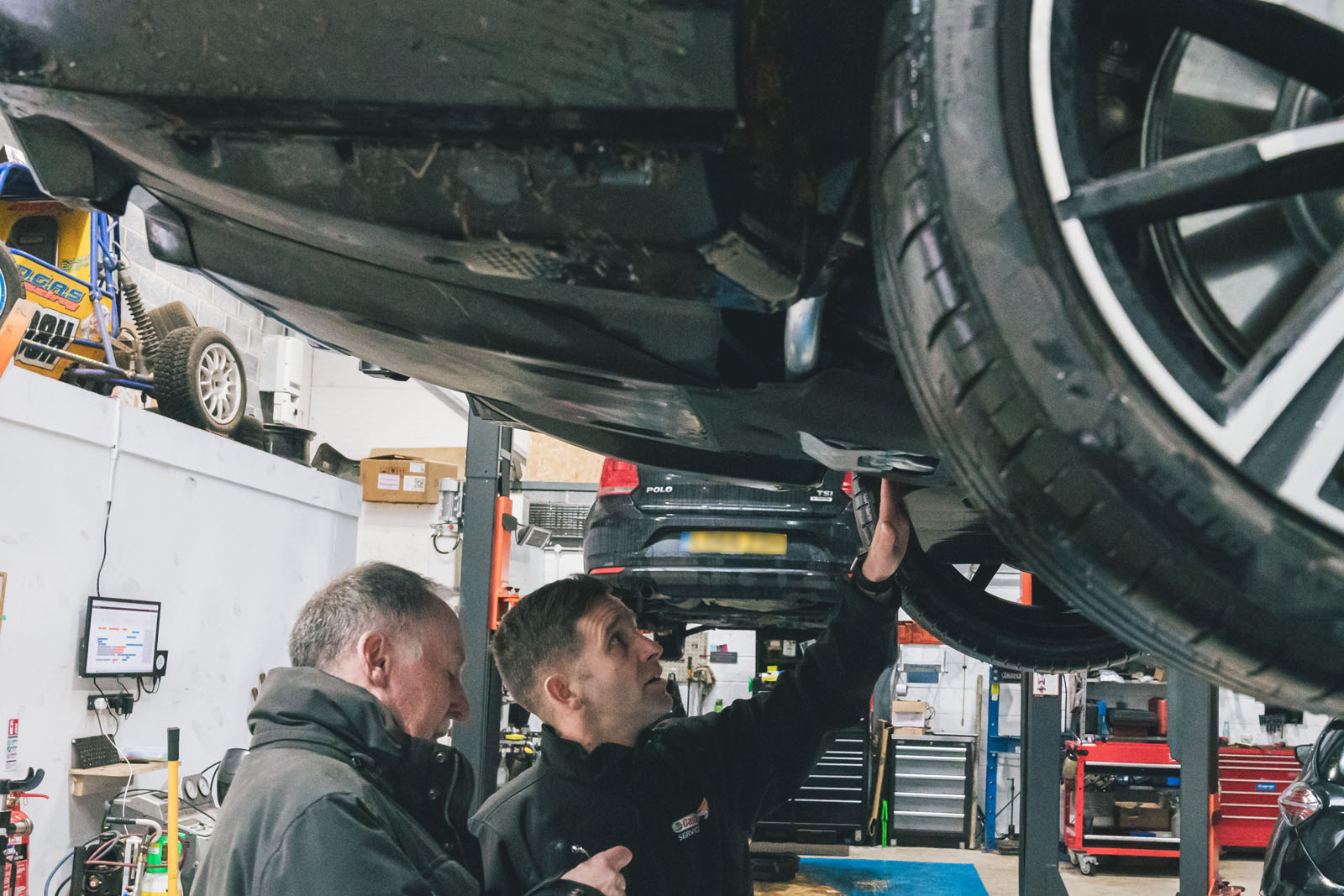
There are no special procedures testing an EV other than checking visible wiring for security and deterioration. The failure points include higher wear rates on the tyres and suspension and the industry warned about this.
According to Motoreasy, a 2021 government report foresaw that EVs would be likely to fail more often of safety-critical items. A 2023 study carried out by the Institute of the Motor Industry found EVs are 40% more likely to fail their MOTs due to defective tyres compared with ICE vehicles because of two contributing factors: their greater kerb weights and torquey electric motors, which take a toll on suspension components. Current figures from Michelin largely support this, with the manufacturer claiming EVs can wear tyres up to 30% faster than an ICE equivalent.
Conversely, because EVs rely more on regenerative braking, pad life is extended – although a flip side is a higher rate of caliper and disc degeneration due to lack of constant use.
Contradicting this somewhat are the findings of Kwik Fit, the UK's biggest provider of MOTs: “Our data shows that for their first MOT, EVs have a higher average pass rate than ICE vehicles,” it said. “This is the same for all MOTs, although the differential narrows when looking at all cars, not just those at three years old.
“EVs also receive fewer advisories and minor defects on average compared to ICE equivalents. However, we do see a slightly higher number of dangerous defects on EVs which fail their MOT than on ICE failures. This is largely due to the number of EVs failing the test on tyre tread depth.”
If anything, it is not the fault of the vehicles themselves but apathetic owners. It is possible they believe that, because there is no combustion engine – itself often neglected – it is for all intents and purposes now maintenance-free.
“This highlights the importance of encouraging drivers to regularly check the wearable components on their cars,” said Kwik Fit. “While there are fewer parts to service on EVs compared to ICEs, they still require regular maintenance. This is especially relevant for tyres, which on EVs have to handle additional instant torque and weight.”
“Overall it is very rare that we have any issues with EVs and their MOTs” claims Richard Norris, founder of Drive Green, said to be UK’s largest EV dealer. “Tyres wear, which is to be expected, yet EV tyre wear is not significantly different to what you would expect from a regular car.
“Suspension is a regular repair item, but again in line with what you are seeing on all cars, due to the state of the roads (with the exception of Teslas, which seem to have a higher suspension wear rate, with this being a common necessary repair – again due to the state of the roads and possibly the quality of the parts used at manufacture.)
“The most common advisory after tyres is brake disc corrosion, due to the reduced wear that occurs with EVs, as the motor does a lot of the braking. However it only ever tends to be an advisory, and does not lead to problems. It is very easily resolved and without cost in most cases – by just simply using the brakes occasionally.”
This is not to say that EVs do not have issues sometimes admits Norris, particularly software related. Maintenance overall is less, but EVs are still subject to common wear items that are common to all cars such as tyres, brakes, suspension, and 12V batteries.

Go to comments