
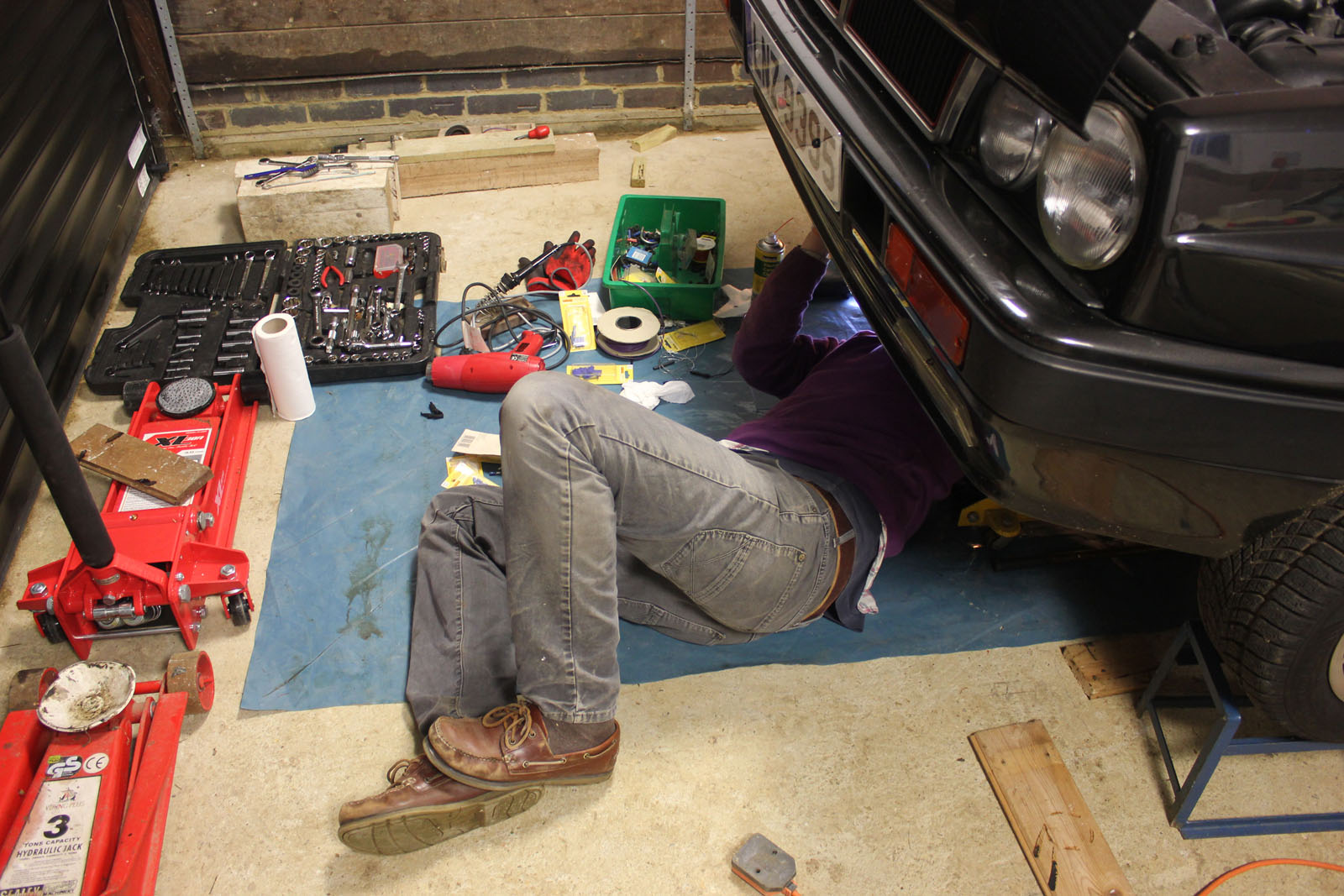
The sight of motorists tinkering with their toolkits is becoming a thing of the past as DIY repairs continue their inevitable decline.
According to Warrantywise, a sharp drop-off means as few as 6% now attempt their own car repairs. “Our research [a poll of 2000 motorists] shows that most UK drivers simply don’t feel equipped to handle repairs themselves,” it said.
An earlier 2022 Compare the Market survey revealed 76% of UK drivers now struggle with the most basic car maintenance tasks such as checking and topping up fluids. Almost two thirds freely admit that they aren’t interested in learning more on the subject, despite a claimed 90% of drivers turning to social media for instant advice and guidance.
Warrantywise’s 2025 findings say younger drivers (18-24) are the most prepared to get their hands dirty, yet conflicting research from Halfords suggests they are even more likely to look to someone else for repairs, with 57% of ‘Gen Z’ confessing they didn’t know how to pump up their tyres. Only 35% could fit new wiper blades.
This lack of confidence stems from never learning hands-on skills from their parents, unlike earlier generations who grew up in the DIY heyday. Just 6% of Gen Z feels confident in having a go, compared to almost 40% of those aged 55+.
Another survey by Aviva shows 45% of all ages admit to having botched repairs, too. Technician Kevin Bradley AMIMI told CAT: “It should be regulated to stop novices touching things they have no idea on.”
In 1970, it was reported by the National Economics Development Office that at least one in three motorists happily tackled even quite major repairs on their cars – although many designs still relied on post-war technology and required only the most basic toolkit. Ever-increasing complexity and the need for specialised tools, knowledge and equipment are some of reasons for the sea change in attitudes but there’s also an often overlooked legal one: the Clean Neighbourhoods and Environment Act 2005, which makes – unless broken down – it illegal to work on a vehicle on the highway.
Self-service garages provided one answer and during the '70s BP fronted a network called Moonlighting, where a normal workshop was turned over to DIY mechanics during evenings and weekends. DBA Self Service Garage of Sussex still provides a similar service renting out bays by the hour, day or week, with optional help provided by workshop staff. It still remains quite popular among serious DIYers, the company told CAT.
However, Martyn Knowles, editor of Car Mechanics, launched in spring 1958 and now the only consumer DIY motorist magazine remaining, told CAT such self-service garages need footfall to keep going due to high rents. “They either go bust or are absorbed by mobile mechanics in the area who use them at a trade rate”, he said.
For the Independent Garage Association (IGA) it’s RIP for DIY, and not before time. “For decades, motorists have carried out basic maintenance themselves, but today’s vehicles are very different,” said Jonathan Douglass, Director of the Independent Garage Association. “Modern cars rely heavily on electronics, software and safety systems, meaning that diagnosing a problem often requires specialist tools and training before any repairs can begin.
“That shift has naturally reduced the scope for DIY repair, with drivers increasingly relying on skilled technicians who understand these systems and have access to the right equipment, vehicle data and software.
“Independent garages are at the forefront of supporting motorists through this change. They invest in training, diagnostic equipment and access to vehicle manufacturer’s data and software, enabling them to continue delivering safe, reliable repairs. Ensuring garages have access to data, ongoing technician development and a strong pipeline of new talent is essential to maintaining trusted local expertise as vehicles evolve.”
Car Mechanics' Knowles retorts that while DIY is on the decline, it will never completely die. “There is no doubt that working on modern cars has become harder for DIYers. Though much hasn’t changed for 130+ years – there’s still an internal combustion engine with pistons rising and falling. The fact is, the more modern a vehicle, the more emissions-related sensors you will find attached to the drivetrain that might possibly be the vehicle’s weak link.
“For many motorists the car is seen as an A to B commodity – they drive it and never bother to lift the bonnet to check fluids. Even the windscreen washer fluid is used as little as possible, so as not to replenish it. That job can be done at the annual service. For these types of car owners who know nothing about the basics of car repairs, the garage will always be their friend when needed. Which is fine.
“Car Mechanics readers are made up of mainly DIYers and around 35% have worked or do work in the trade. Some of the DIYers will have worked in the automotive trade at some point in their life and some DIYers have no trade experience at all. They're just happy to work on vehicles, which they’ve done since they were a youngster, many taking skills from their parents in keeping cars on the road.
“Today’s automotive DIYers are savvy. Removing nuts and bolts to renew a component is part of looking after their vehicle, but most, if not all, will have some form of code reader in their toolbox as they can be bought for less than £100”.
Knowles feels the increase in EVs will present a challenge though. “With the introduction of more hybrid and electric vehicles to the market, I think DIYers will stick with the cars they own, fixing them when required themselves, or using a friendly local garage. They shouldn’t shy away from working on hybrids though, as mostly the drivetrain and engine can be worked on without touching the high-voltage traction battery side of things. Obviously knowledge of how they work is important and that’s where reading Car Mechanics helps.
“Downsizing of engines over the past 15 years has worked well for some manufacturers and not so with others. Wet-belt driven engines are susceptible to failure if service schedules are missed or the wrong oil (or additives) used. Consequently, if motorists drive a car with a proven bullet-proof engine, then why change that for a new model – which may not offer the same long-term reliability?” Perhaps this is one reason why the average vehicle age now stands at almost 10 ten years.



Go to comments