
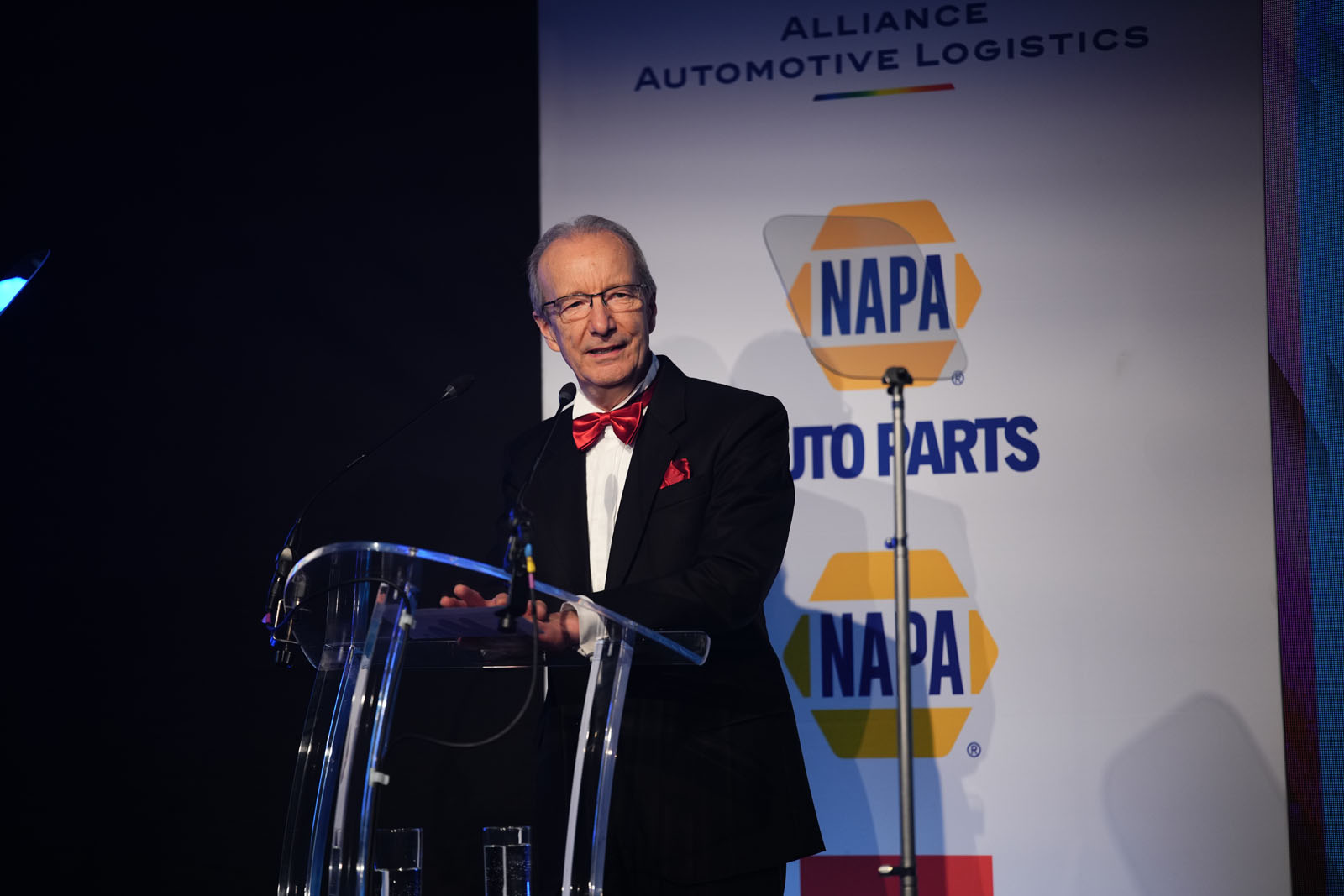
The aftermarket must make sure the relevant access to vehicle data continues to be enshrined in law if it is to thrive beyond 2030, a key industry figure who helped shape the sector over the last 40 years has warned, as he looks to retire at the end of the month.
“Access to the vehicle is the defining issue of our time,” said Independent Automotive Aftermarket Federation (IAAF) Technical Director Neil Pattemore. “If we don't have the legislator setting the requirements, then we’ll have individual vehicle manufacturers doing it. Then it will become the Wild West, and that’s expensive.”
Pattemore has been an instrumental figure in the aftermarket’s dealings with government in Westminster, Brussels for over 15 years, including revisions to the all-important UK Block Exemption Order and vehicle Type Approval. While he is retiring, Pattemore is urging the sector to continue to fight its corner. “The aftermarket must make sure its voice continues to be heard.”
Alongside his role at the IAAF, Pattemore has been Technical Director at FIGIEFA, the Brussels-based association that represents the interests of the independent aftermarket in Europe and also Technical Director at the European Garage Equipment Association. Before taking on the legislative challenge, he has worked right across the industry, which gave him the grounding needed for his high-level roles. “I have been in the aftermarket pretty much all my working life.”
Revolution
Pattemore has seen the sector evolve across his career. “The 1980s was the pivotal decade,” he recalled. “It saw the introduction of electronically controlled systems, with the real key being fuel injection. This brought in interconnected sensors, computers, and ultimately data. That was the game changer in terms of vehicle technology. You then had to be able to diagnose the data coming from those sensors. That was the revolution.”
As Pattemore eyes his exit from the sector, he notes that the pace of change is accelerating, but not always in the way anyone expected. “There is already a U-turn on electric vehicles in the EU. The VMs have been forced to do things that ultimately have been extremely expensive in a very short period of time, but the aftermarket also geared up. One in four technicians is now accredited to work on EVs in the UK, but only one in 19 vehicles on UK roads are actually electric.”
Disparity
Access to the best quality data has been the true change driver in recent years: “The real story is the implementation of software and remote communication. The OBD port, which is relatively old technology, can't handle the bandwidth and speed of transmission required now. This is where the car has really changed.
“There's a disparity developing between what the vehicle manufacturers feed to their authorised repairer and what the aftermarket can do. If you can't get access to the vehicle through a communication interface, particularly if it's remote, you can't get the best data.”
This is where legislation comes into play. “Fortunately this has been recognised, and is covered in the UK’s Motor Vehicle Block Exemption Order (MV-BEO). The government listened to what we told them. The European Commission is definitely aware of it too and they're working on it for their MV-BER.”
Competition
The price of victory is eternal vigilance, so Pattemore knows the battle is not over. “The Department for Transport are not looking at data because that comes under the Data Use and Access Act from last year and, and they see that as the responsibility of the Department for Business and Trade and within that the Competition and Mergers Authority (CMA), who were the authors of the UK MV-BEO.
“It’s important for government to understand that the industry is evolving. The VMs are facing stiff competition on all fronts, and that has led to changes in the way they work with the main dealers, who have themselves reacted by lowering prices, especially for older vehicles.
“At the same time, independent workshops had to invest in training and new equipment. They have also needed to develop a new business model based around remote service support. It’s a really good evolution, but ultimately the VMs still control the access, because you've got cybersecurity gateways behind the OBD connector, meaning you have to apply and register with the vehicle manufacturer.
“This isn’t free, and it’s meant that as dealer hourly rates have dropped, independent prices are rising. The difference in cost is becoming less obvious to the consumer. The only winner is the VM. They're not making money on selling cars, but they'll make money from selling you data.”
“The IAAF has been talking to government at the highest level to make sure that they're very aware of these issues and the revisions to legislation that they need to consider.”
Framework
Looking ahead, Pattemore’s warning is stark: “If government doesn't recognise these changes, and Type Approval isn’t revised to allow remote communication, it could inadvertently legitimise a monopoly.
“As vehicles become more sophisticated, and more cyber secure, you would need accreditation with each vehicle manufacturer, so you need a standardised framework, set by the legislator and used by all stakeholders. Luckily, that framework actually exists; SERMI. It's currently being used for anti-theft related processes, but it could cover many bases, and this is already being discussed in Brussels.”
Value
Choice is key, and the customer is king: “When the consumer chooses to take their vehicle to an independent workshop, they do it for location, price, and quality of service or a combination of all of these. The bottom line is that they value the aftermarket.
“UK automotive is worth £93 billion a year, and two thirds of that is from the aftermarket. Despite this, government still doesn’t recognise us as an important contributor to the UK economy. The aftermarket could become less viable if government does not see when legislation needs to be revised.”
Asked if the sector will get what it needs, Pattemore said: “I'm quietly confident. Ultimately, the aftermarket only exists because consumers choose to use independent repairers. That is possible because of legislation. If all parts of the industry continue to work together to make sure that legal framework continues to evolve, then the aftermarket will be in a good place, so I'm not worried.”


Go to comments