
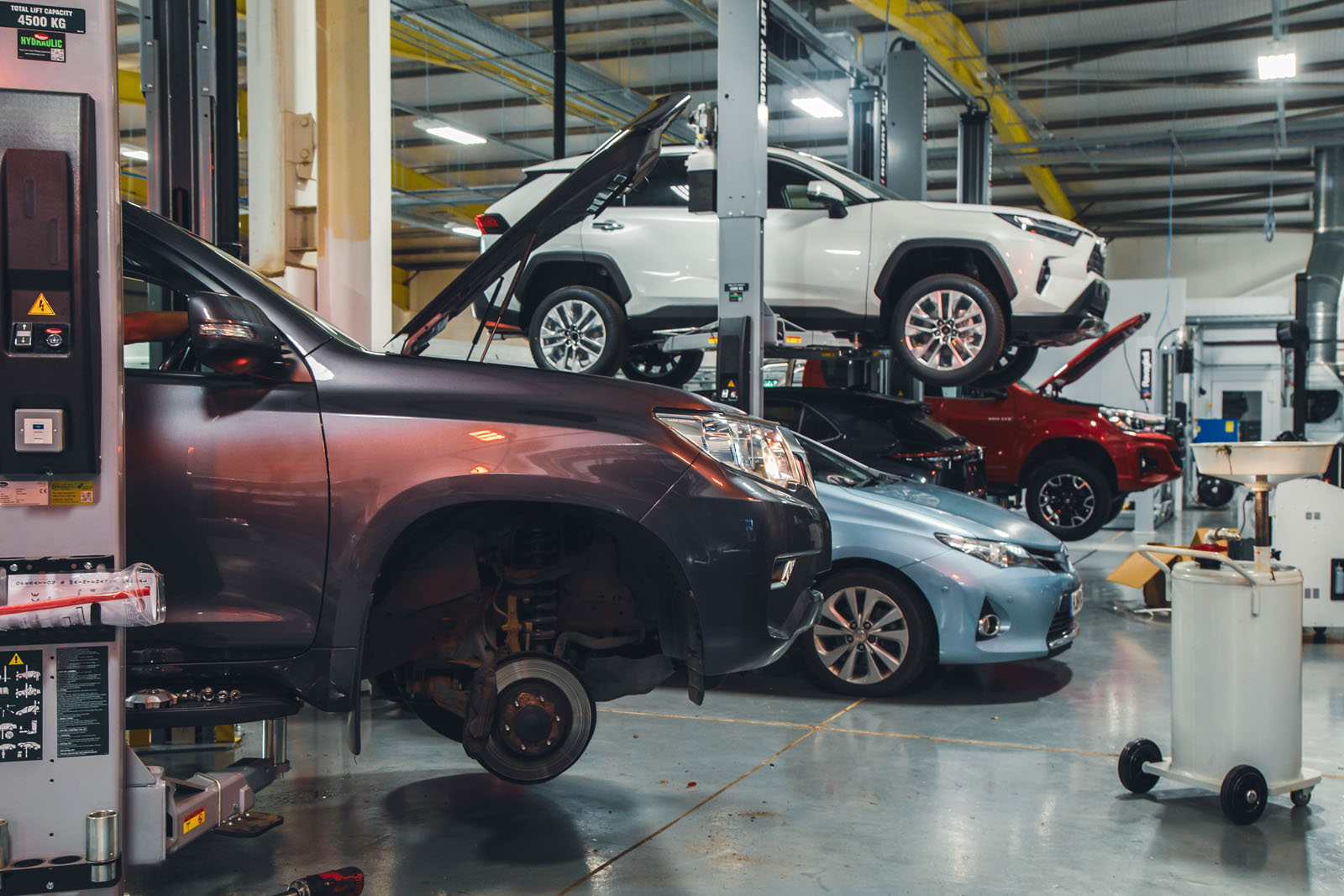
According to the Society of Motor Manufacturers and Traders, more than half of the vehicles on UK roads are now 10 years old or more. But is the nation's ageing fleet good news for garages and the parts trade?
The garage view
John Nixey, owner of Oxfordshire-based garage Motec, thinks so. He says that “when there’s a downturn in the economy, people come out of the main dealers and use independents.”
He told CAT that his garage is normally busy but has “been put under a lot of pressure recently – people want everything doing now”.
This pressure has been building for the last 18 months, said Nixey. Because drivers are keeping cars longer, “people see no reason to go back to the main dealers”.
While drivers are cost conscious, Nixey said they’re not querying bills, but instead requesting fixed prices. Interestingly, drivers aren’t asking for aftermarket parts in preference to OEM – “they never ask”. That said, Nixey explains that most service parts used are OEM anyway.
The garage is busy caring for older cars with general wear and tear but also suspension faults and tyre repairs, given the declining state of the nation's roads.
Andy Turbefield, Halfords Motoring Expert, says business is good. He told CAT “we are showing good year on year growth in vehicle service, maintenance, and repair… we see no reason for this to fall”. He notes that “consumers are being more cautious with their spending”.
As for the increasing age of cars, he attributed this to the impact of COVID on car production, increased energy costs making new cars more expensive, and the Zero Emission Vehicle Mandate resulting in the production of fewer ICE vehicles. “It is understandable many car owners are waiting longer before purchasing a new vehicle,” he said.
Like Nixey, Halfords is seeing demand for wear-and-tear parts such as brake pads and discs, wheel bearings, steering joints, suspension arms, timing belts and drivetrain components such as clutches – all key for maintaining older cars.
What does this mean for Halfords? A mixed bag. In terms of sourcing spares, Turbefield says Halfords uses a range of suppliers but that a challenge has arisen in dealing with new Chinese cars, for whom “there are fewer channels to obtain parts and technical data”.
On the matter of OEM versus aftermarket, Turbefield said that in general “customers put their trust into the advice on the parts from their aftermarket provider”. He added: “as long as parts remain available and older vehicles continue to meet MOT standards… these vehicles will stay on the road.”
Parts suppliers
For supplier Jayar Car Parts, Sharon Cornwell, marketing manager, said: “Cars are better built than they were years ago so tend to last longer.” She too thinks that the prices of new vehicles has risen dramatically over the last few years, “making drivers keep vehicles for longer”.
The issues that cars suffer from – based on what Jayar is selling – have changed. Yes, wear and tear items are relevant, but Cornwell reckons technology has had an impact, with problems more frequently being related to electronics and sensor failures.
Despite being able to supply parts comfortably and get hold of parts once exclusive to dealers – and “generally at a much better price than the main dealer too” – one of the biggest challenges “with older vehicles are the stricter emissions rules”.
Given this, it’s no surprise that, as Cornwell said, “the main dealers are the go-to for warranty and new car services, but independents pick up business as the car ages”.
Likewise, a spokesperson for LKQ Euro Car Parts, told CAT: “It’s the middle of the market that’s shifted, with far fewer motorists trading in vehicles at the traditional five-to-six-year mark as economic pressure pushes more private owners to keep their cars running for longer.”
And as with Jayar, they considered traditional failures relevant but added that “even on vehicles that are more than a decade old, increasingly the problems that arise are electronic.” They said: “what makes these repairs different – and ultimately more complex – is the level of integration.”
All of this, from LKQ’s standpoint, helps the independent aftermarket as “many drivers are looking for cost-effective ways to keep older cars running… what we’re hearing from the motor trade is that outlook is broadly positive… with the biggest opportunity coming from older vehicles – particularly the 10–14-year segment – as the ageing parc drives more frequent and often more complex repairs.”
Adam White, commercial director, GSF Car Parts understands that “money is tight, and rising costs at the pumps will likely push even more people into reconsidering their next vehicle purchase… when money is tight, replacing a vehicle simply isn’t realistic. Repairing it is”.
He too sees technology as driving change in the sector and worries that “technicians are now expected to service everything from ageing diesel vans to advanced electric and hybrid vehicles, often under the same roof; the aftermarket support required by EVs is often underestimated.”
White suggested that older vehicles are “far more reliant on garages, and by extension motor factors, to keep them efficient, reliable and safe.” He adds that “data has shown that motorists are delaying recommended service intervals, ignoring warning lights, and putting off tyre changes.”
Even so, he believes that independents are key to the sector “because they offer professional expertise without the overheads of franchised dealers.”
Longer replacement cycles
Kelvin Olds, product director at First Line Ltd, similarly recognises that drivers are holding onto vehicles for longer and running them well into their second decade. “Replacement cycles have stretched noticeably compared with previous years,” he said.
And because the average vehicle age is increasing, it’s “directly feeding demand for replacement components across the aftermarket”.
But it’s what’s changing that is interesting to Olds: “Modern vehicles are… increasingly built using modular and encapsulated assemblies. This means technicians are often required to replace complete units rather than individual serviceable parts.”
Another notable shift that Olds is witnessing is an “increasing polarisation between premium and value product demand.” In essence, he reckons that “higher-mileage vehicles often require OE-matching durability, while older, lower-value vehicles are more likely to be repaired using cost-effective alternatives.”
He too believes that independents will benefit from the ageing vehicle parc as more vehicles move beyond the dealer network and manufacturer warranty periods. “In practical terms,” Olds says, “many workshops are seeing steady opportunity, but the mix of work is evolving.”
In all, it’s clear that drivers are price sensitive – and that's good news for independents and the aftermarket.


Go to comments